
Vented vs. Solid Soffit: What Your Florida Attic Needs
Vented vs solid soffit isn't just a looks question. Here's how soffit vents help your attic breathe in Florida heat, where solid panels make more sense, and how to choose.
Key Takeaways
5 quick answersIt's the panel on the underside of your eaves, between the fascia and the wall of the house.
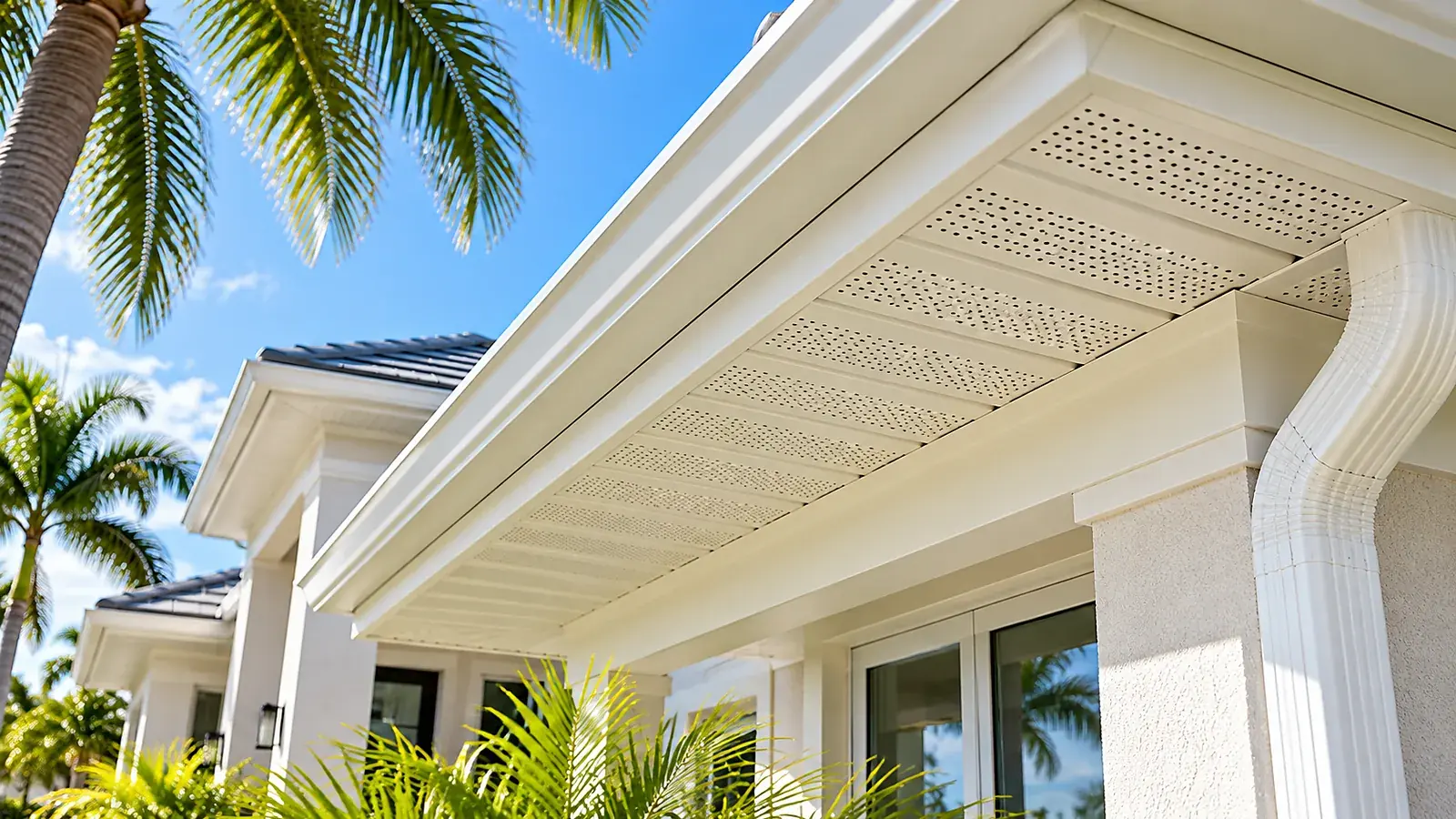
Small perforations let outside air into the attic at its lowest point, which is how many attics take in fresh air.
Air comes in low through the soffit and leaves high through ridge or roof vents, carrying heat and moisture out.
Porch ceilings, lanais, and overhangs that don't open into the attic often use solid panels instead.
Soffit, fascia, and gutters sit side by side, so planning them together gives you a cleaner roofline.
"Our attic feels like an oven every summer, and the roofer mentioned something about soffit vents. Half of our soffit has little holes in it and half doesn't. Should all of it be vented, or does solid soffit have a purpose too?"
Both have a job. The vented vs solid soffit choice depends on what's above that part of the overhang. Vented soffit belongs where the eave opens into the attic, because it lets fresh air in at the bottom of the roof. Solid soffit belongs where there's no attic to ventilate, like a porch ceiling or a closed-in overhang.
Here's how to tell which goes where on a Florida home.
What Soffit Actually Does
Soffit is the panel tucked under your roof overhang, running from the fascia back to the wall. It closes in the rafter tails, keeps birds and critters out, and gives the roofline a finished look. Because it sits right next to the fascia, trouble in one often shows up in the other, which is why fascia and soffit repair is often one job.
How Vented Soffit Helps Your Attic
Vented soffit has small perforations that let air into the attic at its lowest point. According to This Old House, soffit vents bring cooler air in at the bottom while vents near the ridge let hot air out at the top, creating a natural flow through the attic. That airflow helps regulate attic temperature and keeps moisture from building up, which matters in a place as hot and humid as the Suncoast.
Where Solid Soffit Makes Sense
Not every overhang opens into the attic. Covered porches, lanais, entry ceilings, and some garage overhangs are closed in, so there's nothing for a vent to feed. Solid soffit gives those areas a clean, finished ceiling without holes that serve no purpose. Plenty of homes end up with a mix: vented panels along the eaves and solid panels under the porch.
Choosing Soffit for a Florida Home
Check what's above it. If the overhang opens into the attic and the roof has vents up top, vented soffit is usually the right call.
Keep critters out. Gaps and damaged panels invite birds, rodents, and insects. Tight, well-fastened soffit keeps them out.
Plan for storms. Loose or damaged panels can work free in high winds, so secure soffit belongs on your hurricane season gutter prep list.
Match the roofline. Soffit sits right beside your fascia and gutters, so it's worth choosing all three together, especially when you're settling on a gutter color.
It's also worth a look whenever gutters are replaced, since the seamless gutter installation process starts with checking the wood and trim behind them.
Conclusion
The vented vs solid soffit question has a simple rule of thumb: vent the overhangs that open into the attic, and close in the ones that don't. Vented soffit helps your attic breathe through Florida summers, while solid soffit gives porches and lanais a clean finish. Get the mix right, and with seamless gutters along the same roofline, your home looks better and works better.
If your soffit is stained, sagging, or letting critters in, our crew can replace it and match it to your fascia and gutters. We handle gutter, fascia, and soffit installation in-house, so it all gets done by one local team. Explore our soffit and fascia installation services, or Contact Skyway Gutters for a free, no-pressure estimate.
FAQs
No. Vented soffit belongs where the overhang opens into the attic. Areas like porch ceilings and lanais that don't connect to the attic usually get solid soffit.
They're part of how many attics take in fresh air. Working with vents near the top of the roof, they help move heat and moisture out of the attic, which is useful in hot, humid weather.
Often, yes. Soffit sits below the gutter line, so it can usually be replaced on its own. If the fascia is damaged too, it's smart to handle both while the crew is there.
Keep reading
All posts
Prepping Your Gutters for Hurricane Season on the Suncoast
Hurricane season gutter prep comes down to a few simple checks. Here's what to look at on a Sarasota home before June 1, and why each one matters in a storm.

Fascia and Soffit: The Quiet Backbone of Your Roofline
Fascia and soffit don't get much attention until something rots. Here's what they do, the warning signs to watch for, and why fascia and soffit repair should come before new gutters go up.

A Day on the Rig with the Skyway Crew
Ever wonder what actually happens on install day? Here's the seamless gutter installation process our crews follow, from walking the roofline to the final walkthrough.