
Why Are My Gutters Sagging? Causes and Fixes
Sagging gutters don't fix themselves, and the low spot gets worse with every storm. Here's what makes a gutter sag, how to tell the causes apart and what the fix looks like.
Key Takeaways
5 quick answersOnce a run dips, water collects in the low spot, adding weight that makes the sag worse with each rain.
Loose, bent or widely spaced hangers are the most common reason a gutter starts to droop between supports.
When the board behind the gutter rots, the screws lose their grip and the run drops.
Wet leaves, pine needles and grit can turn a gutter into a heavy trough that strains every fastener.
If the gutter itself is in good shape, new hangers set into solid wood and a fresh pitch usually solve it.
"There's a spot on the back of our house where the gutter dips down in the middle. After it rains, I can see water just sitting there for days. It didn't used to look like that. Why are my gutters sagging, and can they be fixed?"
Sagging gutters almost always come down to support. Either the hangers holding the gutter have loosened or bent, there aren't enough of them or the fascia board they're screwed into has gone soft. Weight from standing water and debris speeds it all up. The good news is that most sags can be fixed without replacing the whole system.
Here's how to figure out what's behind yours.
Common Causes of Sagging Gutters
Loose or failed hangers. Hangers can work loose over time, and older spike-and-ferrule systems are especially prone to it.
Hangers spaced too far apart. Each hanger carries a share of the load. With too few, the gutter droops between them.
Soft fascia. If the board behind the gutter is rotting, the screws pull out and the run drops. That's also why sagging often shows up alongside gutters pulling away from the house.
Heavy debris and water. A clogged gutter full of wet leaves weighs far more than an empty one, and that load pulls on every fastener.
Why a Small Sag Gets Bigger
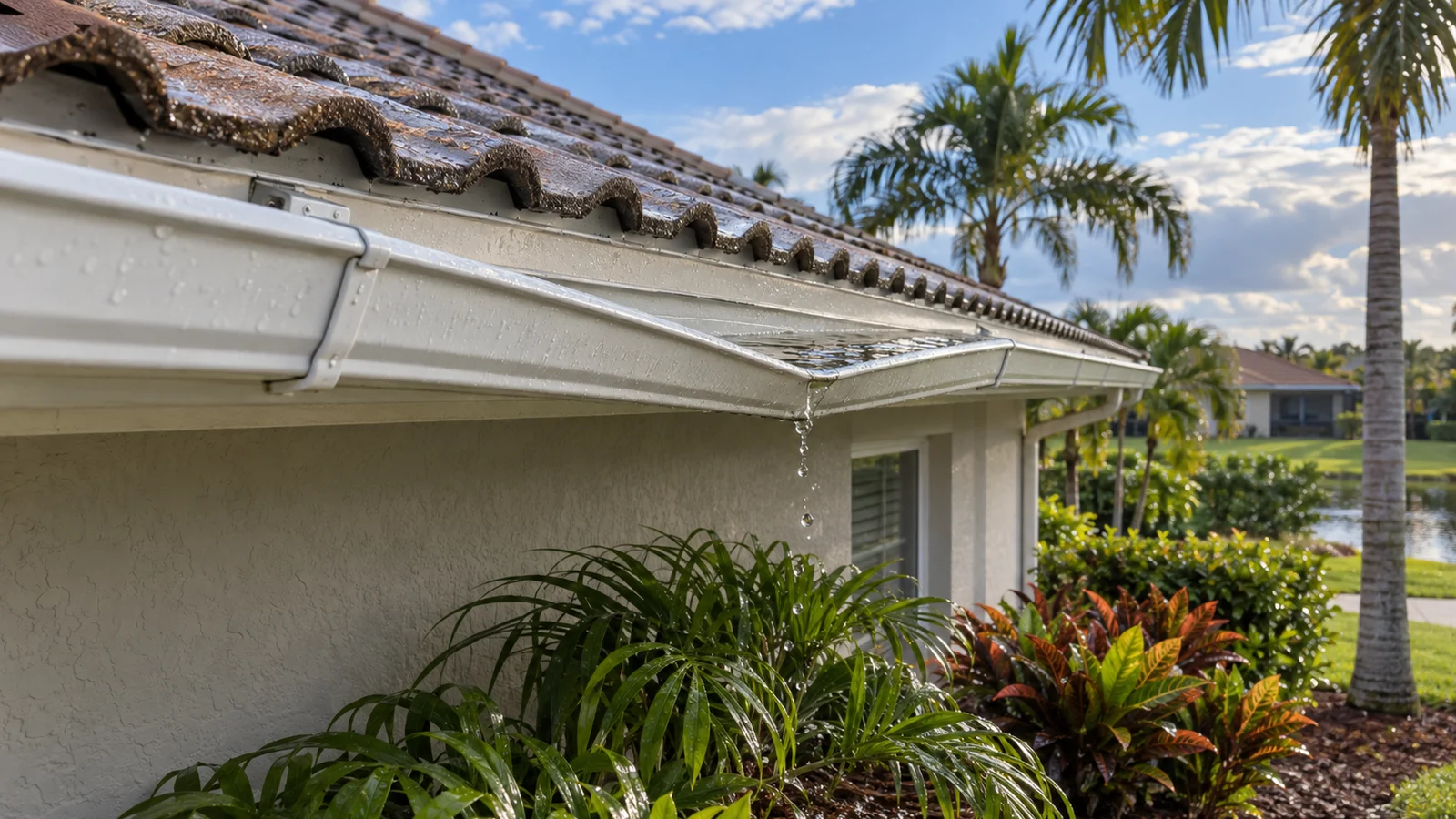
Gutters need a slight slope toward each downspout. When a section sags, it creates a low spot, and water collects there instead of draining. That water adds weight, which pulls the gutter lower, which lets it hold even more water. In Florida's rainy season, the cycle repeats almost every afternoon, which is why a sag you noticed in October can look worse by the end of next summer. Standing water can also spill onto the fascia and soffit, and it gives mosquitoes a place to breed.
How Sagging Gutters Get Fixed
The fix depends on the cause, and clearing the debris first makes the real problem easier to see while taking weight off the run right away. If the gutter and fascia are both sound, the crew sets new hidden hangers into solid wood, spaces them closer together and re-pitches the run so it drains. If the fascia is soft, the damaged section gets replaced first, then the gutter goes back up. If the gutter itself is bent, split or sagging in several places, it's time to look at the signs your gutters need replacing instead of patching one spot.
When to Call a Pro
A single sagging section is often a quick repair, but working on a loaded gutter from a ladder can be tricky, and the cause isn't always visible from the ground. If you're not sure what's going on, have someone take a look. A photo of the low spot after a rain helps, since the standing water shows exactly where the run dips. Our crew handles gutter repair in Bradenton, Sarasota and Lakewood Ranch, and we'll tell you honestly whether a repair will hold.
Conclusion
Sagging gutters are a support problem, and the sooner you fix them, the less damage the standing water does. Clear out the debris, look at the hangers and check the fascia behind the low spot. In most cases, new hangers in solid wood and a proper pitch will get the gutter draining again.
Got a gutter that dips in the middle? Our crew can find out why, rehang it straight and fix any soft fascia behind it, often in a single visit. We work across Sarasota, Bradenton and Lakewood Ranch. Book an On-Site Visit for a free, no-pressure estimate.
FAQs
The most common causes are loose or failed hangers, hangers spaced too far apart, rotted fascia and the weight of debris and standing water. Often it's a mix of two or more.
Usually, yes. If the gutter is in good shape, new hangers and a fresh pitch can fix the sag. Replacement makes more sense when the gutter is damaged or sagging in several places.
Many installers space hangers about every two to three feet, and closer in areas with strong wind or heavy roof runoff. The right spacing depends on the gutter, the roof and the local weather.
Keep reading
All posts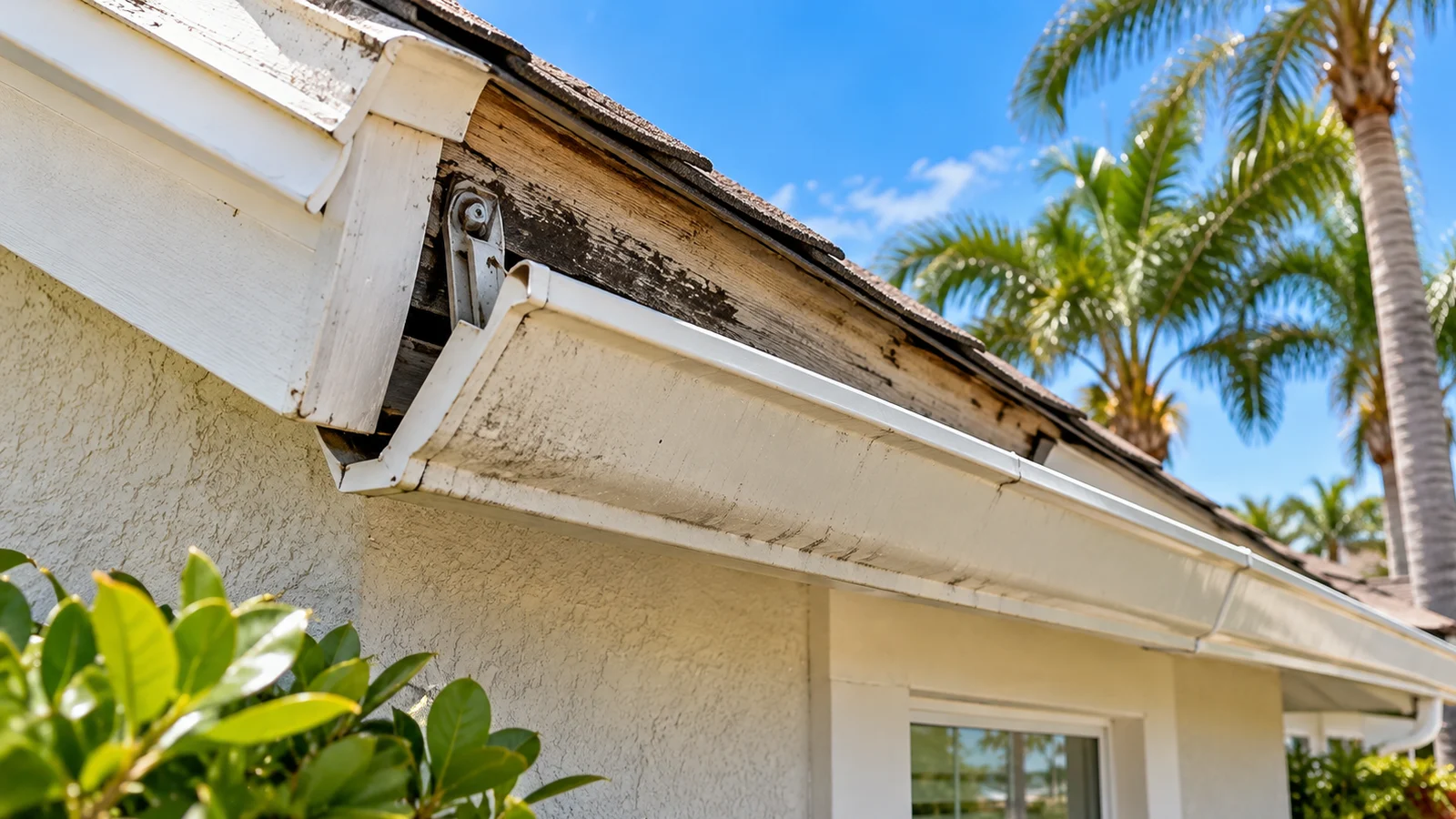
Gutters Pulling Away From the House? Check the Fascia First
When gutters start pulling away from the house, the gutter usually isn't the real problem. Here's why the fascia board behind it is the first place to look, and what the fix involves.

Signs Your Gutters Need Replacing, Not Just Repairing
Sagging runs, peeling paint, and stained soffit are some of the signs your gutters need replacing. Here's how to tell when a repair still makes sense, and when it doesn't.

Why Are My Gutters Overflowing? 6 Common Causes
Gutters overflowing in every storm usually comes down to a handful of causes. Here's how to spot which one you're dealing with, and what fixes it, before the water does damage.