
Hurricane Season Is Ending: Your Post-Storm Gutter Checklist
Hurricane season wraps up November 30, but storms leave their marks behind. This post-hurricane gutter inspection checklist shows what to look for from the ground, and when to call for a closer look.
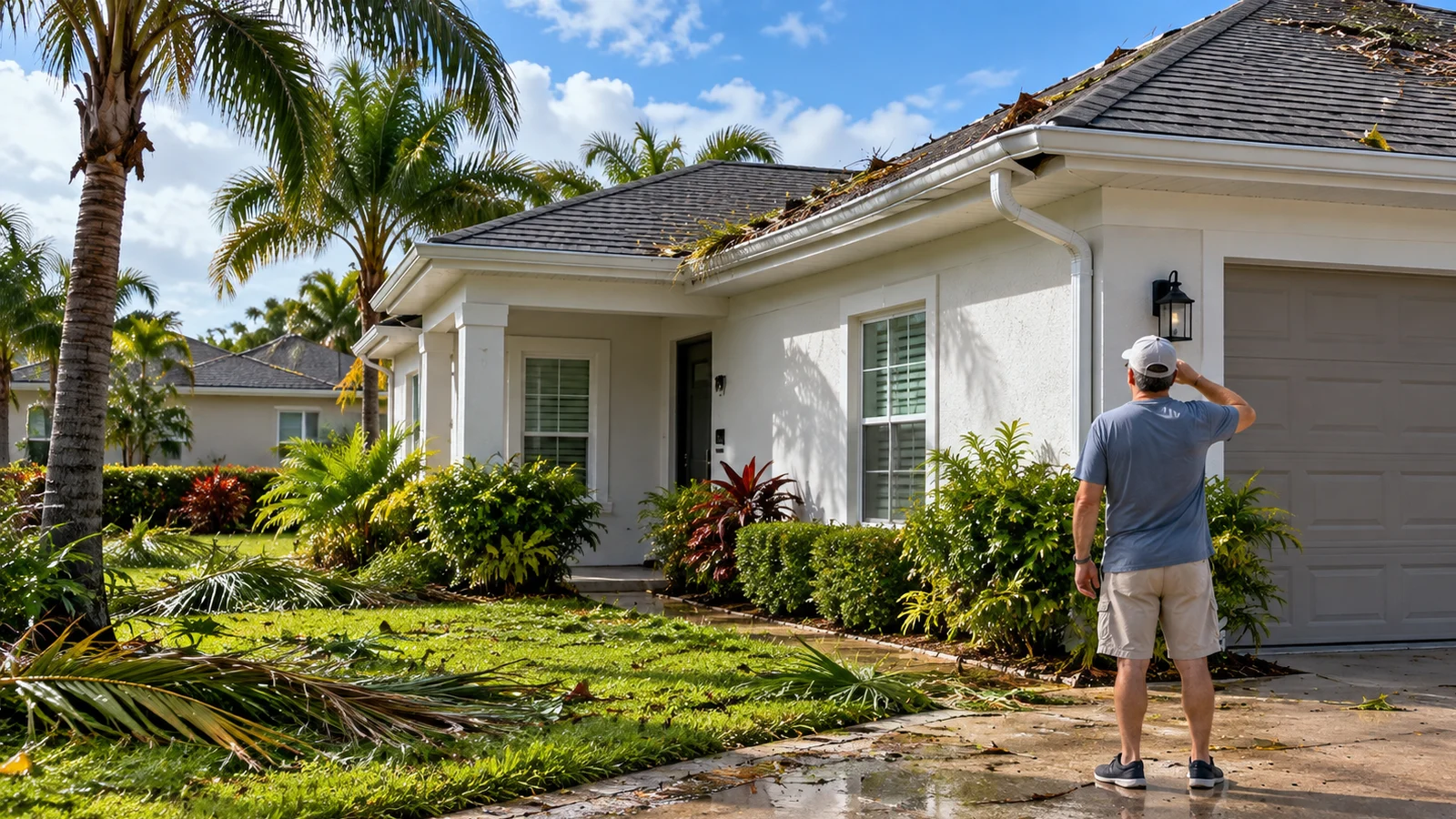
Key Takeaways
5 quick answersMost storm damage to gutters shows from the yard, including bent runs, gaps at the fascia and downspouts knocked loose.
A run can look straight on a calm day and still have hangers that pulled partway out of the fascia in high wind.
Palm fronds, leaves and roof grit from a storm can block outlets even when the gutter looks clear from below.
A downspout that got knocked off or crushed can dump water right at the foundation in the next heavy rain.
The drier months are the easiest time to repair or replace damaged runs so the system is ready for next season.
"We came through the last storm without any real damage, at least that's what we thought. Now one gutter looks a little crooked and there's a gap by the garage. What should I be checking now that hurricane season's almost over?"
A post-hurricane gutter inspection should cover four things: how the gutters are attached, whether they're still straight, whether they're clear and where the water goes when it leaves the downspouts. Strong wind and heavy rain can loosen hangers, bend runs and pack debris into outlets, and a lot of that damage is easy to miss until the next big storm. With the season ending November 30, now's a good time to look.
Here's a simple checklist you can work through from the ground.
What to Look for in a Post-Hurricane Gutter Inspection
Gaps at the fascia. Stand back and look along the roof edge. If you can see daylight between the gutter and the board behind it, the hangers may have pulled loose.
Bent or wavy runs. A gutter should run in a straight line with a slight pitch toward each downspout. Dips, kinks or a run that bows outward usually point to storm stress or a hanger that let go.
Separated corners. Corners take water from two directions, so they get hit hard in a storm. Look for drips, stains or a corner that's pulled apart.
Loose or missing downspouts. Make sure every downspout is still attached at the top and bottom, and that extensions or splash blocks didn't wash away.
Clear the Debris Before the Next Rain

Storms drop a lot onto a Florida roof: palm fronds, oak leaves, seed pods and shingle grit. That debris settles in the trough and around the outlets, and it can block a gutter even when it looks fine from the yard. If you're comfortable on a ladder, clear it by hand and flush each downspout with a hose. If you'd rather not climb after a storm, that's a good job to hand off. It's also worth a look back at hurricane season gutter prep, since the same steps that get a system ready for storms help it recover after one.
Check the Fascia Behind the Gutter
Gutters are only as solid as the board they're screwed into. Wind-driven rain can soak fascia that was already soft, and a gutter pulling away is often the first sign. Look for dark staining, peeling paint or wood that looks swollen along the roof edge. If you spot it, have someone take a closer look before the gutter comes down on its own. A gutter repair visit can reset hangers into solid wood, reseal corners and fix downspouts that got knocked around.
When to Call for a Closer Look
Some checks are best done up close: the hangers inside the trough, the back of the gutter and the fascia behind it. If you found gaps, bends or stains on your walk, or the gutters spilled over during the last storm, book a visit while the weather is dry. Our crew handles gutter repair in Bradenton, FL, Sarasota and the towns in between, and the drier months make it easier to finish repairs well before next June.
Conclusion
A post-hurricane gutter inspection doesn't take long, and it can save you from a much bigger problem during next year's storms. Walk the roofline, look for gaps and bends, clear out the debris and check where the downspouts drain. Anything that looks loose or soft is worth fixing now, while the weather's on your side.
Not sure what you're looking at after the last storm? Our crew can check your gutters, hangers and fascia and tell you straight whether it's a quick repair or something bigger. We work across Sarasota, Bradenton and Lakewood Ranch. Book an On-Site Visit for a free, no-pressure estimate.
FAQs
The Atlantic hurricane season runs from June 1 to November 30. Late-season storms are less common, but they still happen, so it's smart to check your gutters after any big system passes through.
Look for gaps between the gutter and fascia, runs that bend or sag, corners that drip and downspouts that are loose or missing. If the gutters spilled over during the storm, they may be clogged or out of pitch.
It depends on how much of the system is affected. A few loose hangers or one bent section can usually be repaired, but damage along several runs, or soft fascia behind them, often makes replacement the better value.
Keep reading
All posts
Prepping Your Gutters for Hurricane Season on the Suncoast
Hurricane season gutter prep comes down to a few simple checks. Here's what to look at on a Sarasota home before June 1, and why each one matters in a storm.
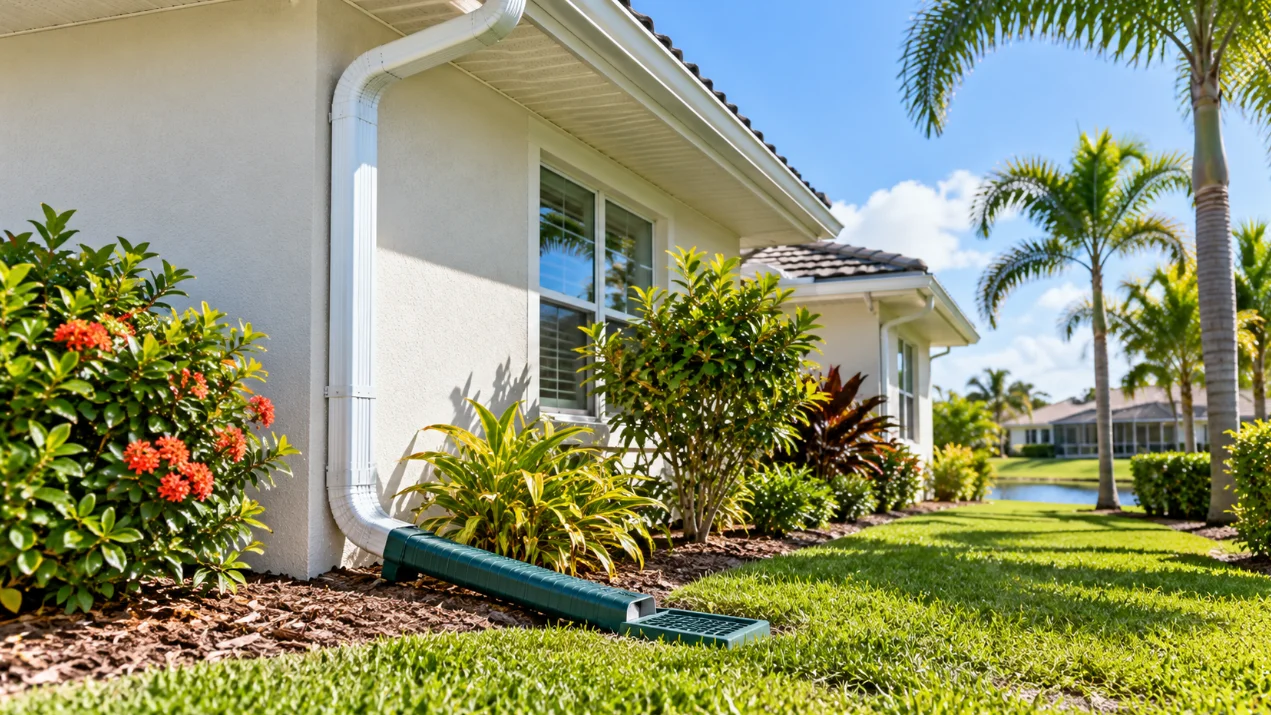
Downspout Drainage: Where Your Water Should Actually Go
Foundation pooling and flooded flowerbeds usually trace back to downspout drainage. Here's where your roof water should actually go, and the simple ways to get it there.
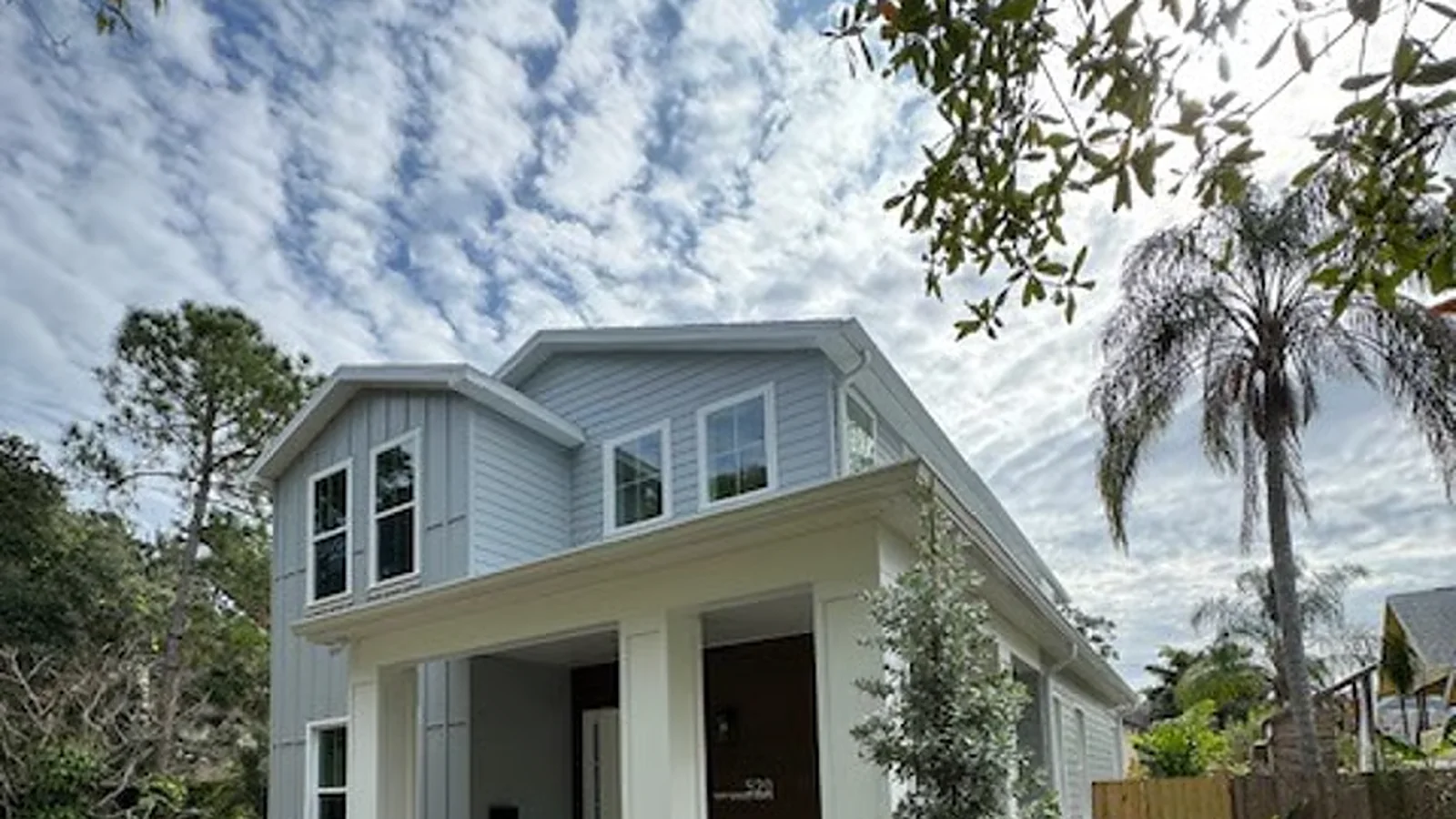
How Often Should You Really Clean Your Gutters in Florida?
Between oak litter, pine needles, and afternoon storms, Florida gutters keep a schedule of their own. Here's how often to clean gutters in Florida, plus the quick checks in between.