
6 Inch vs 7 Inch Gutters: Which Size Does Your Roof Need?
Most homes do fine with 6-inch gutters, but some roofs send more water than a 6-inch gutter can carry. Here's how to tell which size your home needs before your next storm season.
Key Takeaways
5 quick answersA 6-inch K-style gutter is the common choice for typical Suncoast homes and handles most roofs well.
Large roof sections send more water to each gutter run, which is where 7-inch gutters earn their keep.
Water comes off a steep roof faster and can overshoot or overwhelm a smaller gutter.
Where two roof slopes meet, water funnels into one spot, and that section may need more capacity.
A bigger gutter works best with larger or extra downspouts so the water can actually leave.
"We're getting new gutters on our two-story in Parrish, and the estimate mentioned 6-inch or 7-inch. Our old ones overflow every summer, especially at the back corner where two roof sections meet. Is bigger always better, or is that just upselling?"
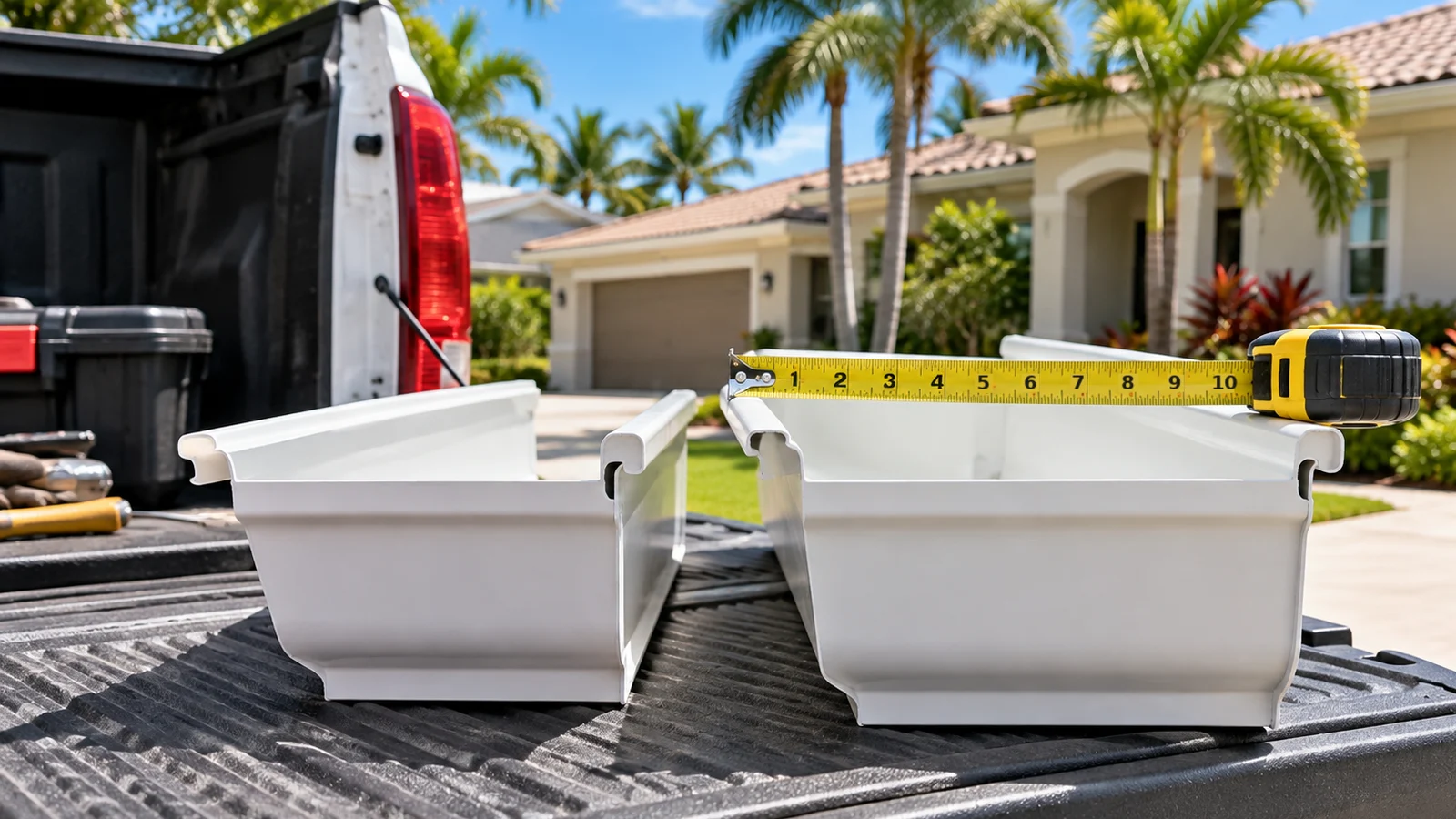
The 6 inch vs 7 inch gutters choice comes down to how much water your roof sends to each gutter run. Most Suncoast homes do fine with 6-inch gutters. Homes with large roof sections, a steep pitch or valleys that funnel water into one spot often do better with 7-inch gutters and larger downspouts. Bigger isn't always better, but on the right roof it's the difference between draining and overflowing.
Here's how to tell which one fits your home.
What 6-Inch Gutters Handle Well
Six-inch K-style gutters are the everyday standard on many Florida homes. They carry plenty of water for a typical ranch or two-story home with average roof sections and a moderate pitch, and they look proportional on most rooflines. For a lot of homes in Sarasota and Lakewood Ranch, that's all the gutter they'll ever need. Paired with the right number of downspouts, a 6-inch system handles our afternoon storms without trouble on most houses.
When 7-Inch Gutters Make More Sense
Seven-inch gutters hold noticeably more water, and they usually pair with larger downspouts. They're worth a look when:
Large roof sections. The more roof that drains into one gutter, the more water it has to carry in a downpour.
Steep pitch. Water picks up speed on a steep roof and can shoot past or overwhelm a smaller gutter.
Roof valleys. Valleys collect water from two slopes and drop it in one spot, which makes them a common place for overflow.
Overflow you've already seen. If your gutters spill over in heavy rain even when they're clean and pitched right, capacity may be the issue.
6 Inch vs 7 Inch Gutters: Other Things to Weigh
Size isn't the only lever. Adding a downspout, or moving up to a larger one, can solve overflow on some homes without changing the gutter size at all. Profile matters too, since the k-style vs half-round gutters choice affects how much water a gutter holds and how it looks on the house. A 7-inch gutter is a little more visible from the street, so it's worth seeing it against your home before you decide. On some homes, the answer is a mix: 7-inch on the big back roof and 6-inch everywhere else.
How We Size Gutters
During a seamless gutter installation estimate, we look at each roof section, the pitch, the valleys and where the water needs to drain, then size the gutters and downspouts to match. Skyway installs both 6-inch and 7-inch K-style, formed on site to fit each wall. If you're comparing options for seamless gutters in Sarasota or nearby, we'll walk you through both sizes on your own house. We'll also point out spots where an extra downspout does more good than a bigger gutter, so you're not paying for size you don't need.
Conclusion
For most homes, 6-inch gutters do the job. The 6 inch vs 7 inch gutters decision really matters on homes with big roof sections, steep pitches or valleys that dump water in one spot. If your gutters overflow even when they're clean, look at size and downspouts before replacing them with the same thing.
Not sure which size your roof needs? Our crew can measure your roofline, check the pitch and valleys and recommend the right gutter and downspout size, with a flat written price. We serve Sarasota, Parrish, Bradenton and Lakewood Ranch. Book an On-Site Visit for a free, no-pressure estimate.
FAQs
Not always. Seven-inch gutters carry more water, which helps on large or steep roofs, but most homes drain well with 6-inch gutters and the right downspouts.
Six-inch K-style gutters are a common choice on Florida homes. Larger roofs, steep pitches and homes with heavy valley runoff often move up to 7-inch gutters with larger downspouts.
They can if the problem is capacity. If the gutters are clogged, sagging or out of pitch, a bigger size won't fix it, so find the cause first.
Keep reading
All posts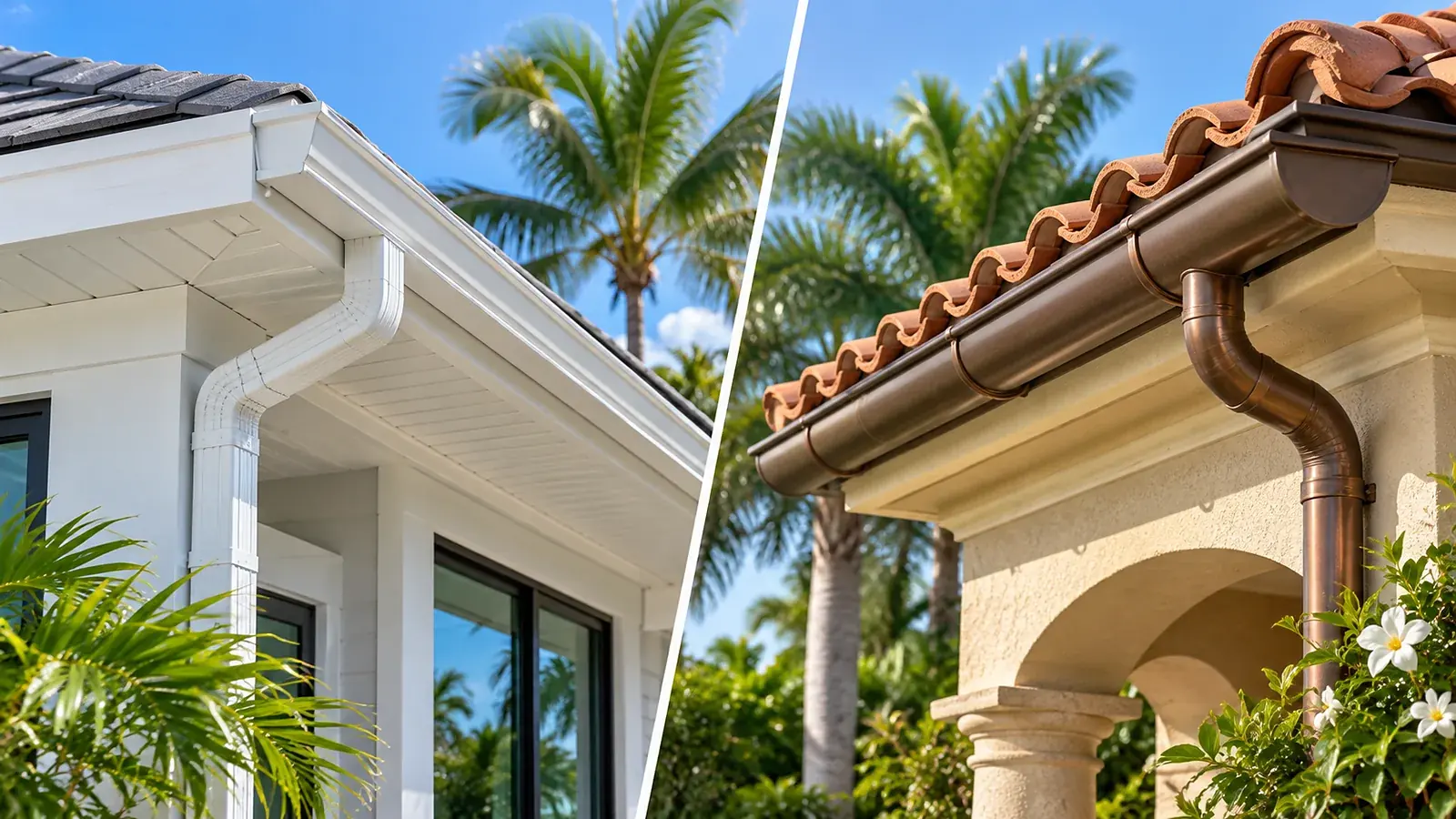
K-Style vs. Half-Round Gutters: Picking the Right Style for Your Home
K-style vs half-round gutters is mostly a question of looks and water flow. Here's how the two profiles compare on Suncoast homes, plus the other styles worth knowing about.
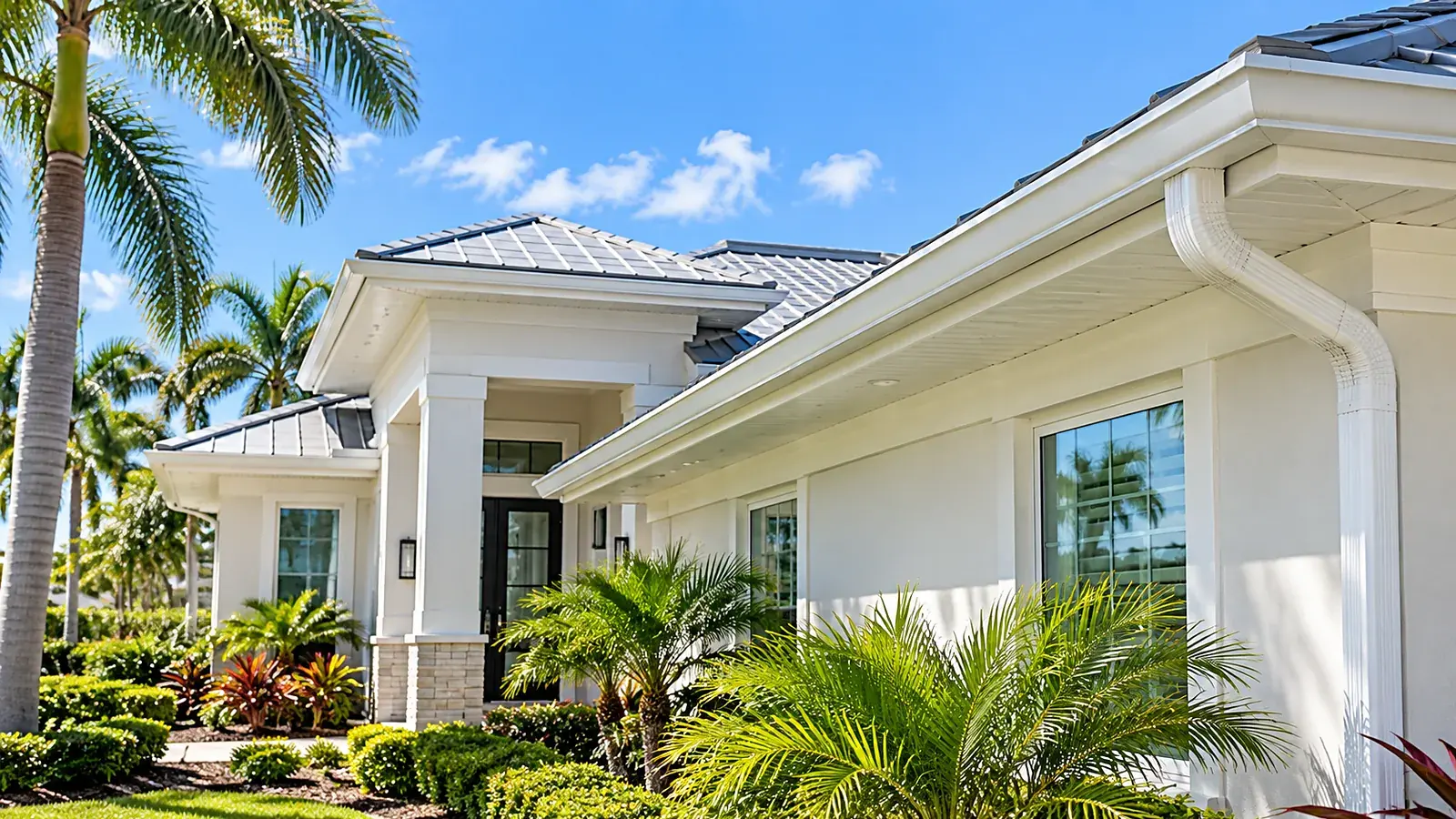
Seamless vs. Sectional Gutters: Which Holds Up Better in Florida?
Seamless vs sectional gutters comes down to one thing: seams. Here's how each type is built, why joints are where leaks start, and which one makes more sense on a Suncoast home.
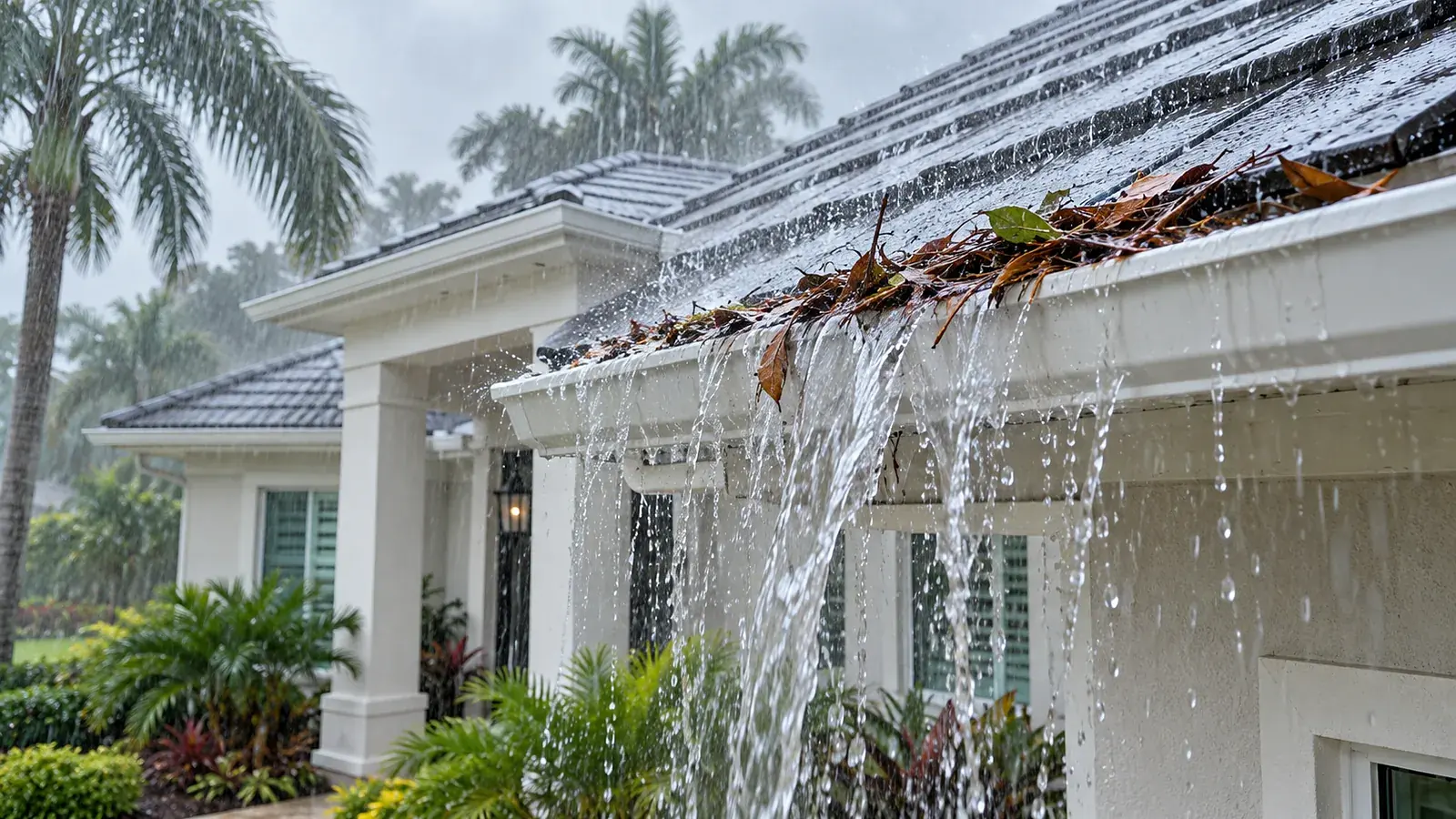
Why Are My Gutters Overflowing? 6 Common Causes
Gutters overflowing in every storm usually comes down to a handful of causes. Here's how to spot which one you're dealing with, and what fixes it, before the water does damage.